Most demand generation advice is written for enterprise companies.
“Build a demand gen stack with Marketo, Salesforce, and HubSpot.”
“Hire a dedicated demand gen manager.”
“Allocate ₹5 crore annually to paid ads and content.”
Great advice. If you have ₹5 crore and a team of 10.
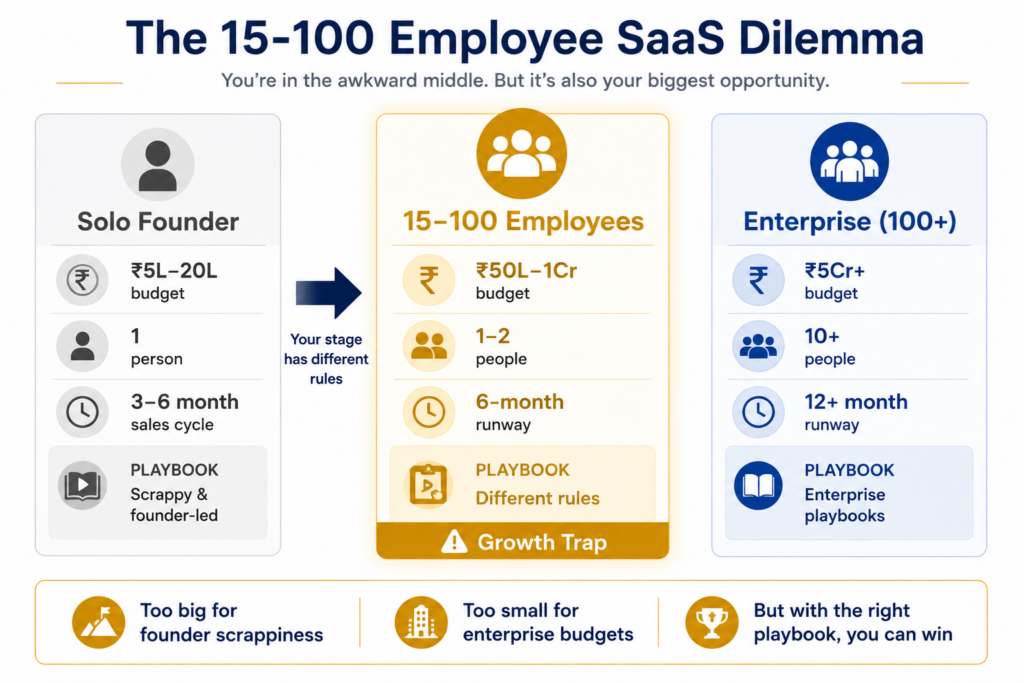
If you’re a B2B SaaS founder in India with ₹30–50L in marketing budget and a board asking why pipeline isn’t keeping pace with headcount, this is written for you.
What if you’re a 30-person B2B SaaS company with a ₹30-50L marketing budget, and you need a qualified pipeline in 90 days?
Most resources don’t address this scenario. But this one does.
Here’s how to build a real demand generation engine: the sequenced system that turns traffic into leads into pipeline without assuming enterprise budget or team size.
Quick Framework (Table)
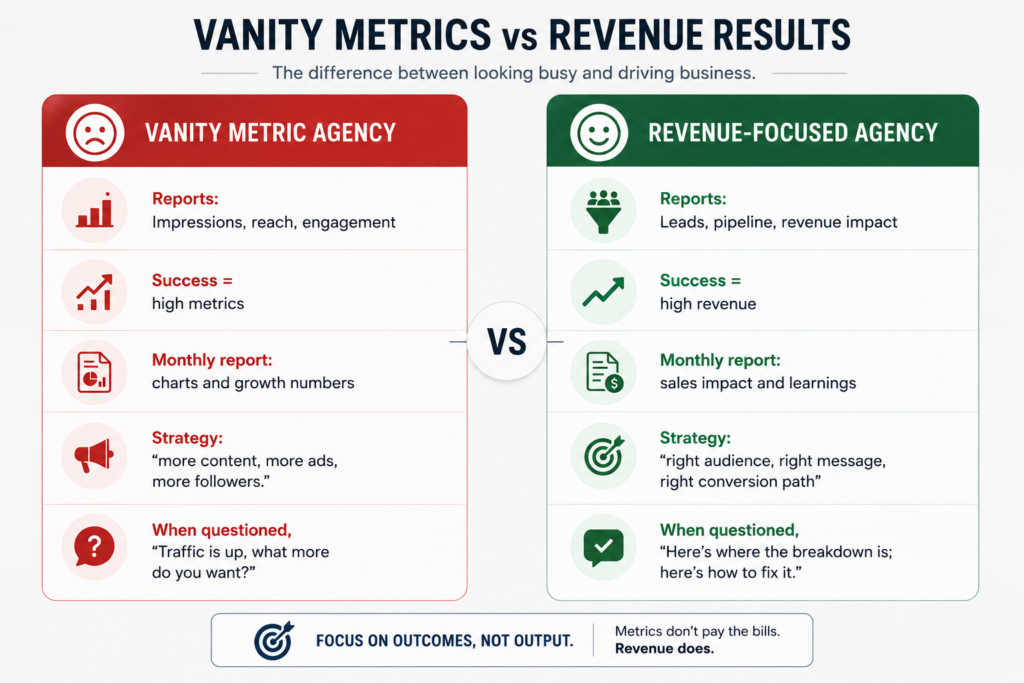
What a Demand Gen Engine Actually Is (vs a Campaign)
First, let’s define terms.
A campaign is a one-time initiative. Run ads for 30 days, boost traffic, and hope for leads.
A demand gen engine is a repeatable system. It takes traffic, converts it systematically, nurtures it through the sales cycle, and produces a predictable pipeline.
The difference matters because:
A campaign might generate 50 leads one month, then nothing when you stop spending.
An engine generates consistent pipeline month after month. It compounds.
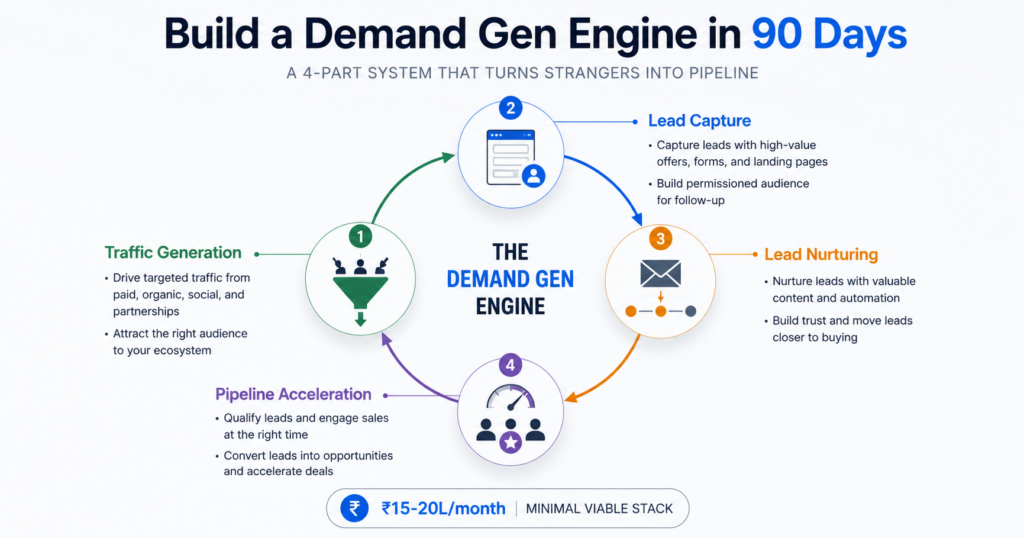
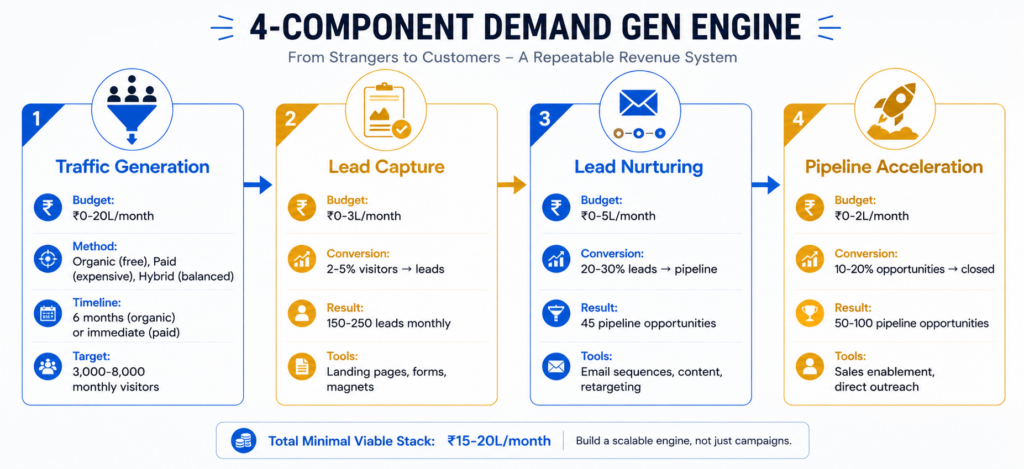
A demand gen engine has 4 components:
- Traffic generation (awareness stage): Getting the right people to visit
- Lead capture (interest stage): Converting visitors into leads
- Lead nurturing (consideration stage): Moving leads toward decision
- Pipeline acceleration (decision stage): Turning leads into meetings/pipeline
Most 30-person companies skip components 3 and 4, which is why they get leads that don’t convert.
An engine has all 4 working together.
The 4 Components Every Demand Gen Engine Needs
Component 1: Traffic Generation (Awareness)
You need qualified traffic to your website.
“Qualified” means people in your target market looking for solutions to problems you solve.
Options (by realistic budget):
Option A: Organic search (₹0 spend, 6-month timeline)
- Publish blog posts targeting your keywords
- Get backlinks (outreach, partnerships)
- Wait for rankings
- Free traffic once established
- Con: Takes 6 months to see results
Option B: Paid ads (₹20-50L/month, immediate results)
- LinkedIn ads targeting your ICP
- Google search ads for commercial keywords
- Retargeting warm audiences
- Immediate traffic
- Con: Expensive per click
Option C: Hybrid (₹10-20L/month, balanced)
- Start with organic (publish content)
- Layer in paid ads for top-intent keywords
- Retarget blog visitors with ads
- Balanced cost/timeline
Recommendation for a 30-person company: Hybrid approach. Start organic (Month 1), layer in paid ads (Month 2).
Component 2: Lead Capture (Interest)
You have traffic. Now convert it.
Most companies skip this step and wonder why traffic doesn’t convert.
Lead capture tools/tactics:
- Landing pages (specific offer per audience segment)
- Lead magnets (PDF, checklist, template for email)
- Contact forms (minimum friction, 3-4 fields max)
- Chatbots (capture interest in real-time)
- Email popups (timed to exit intent)
Budget: ₹0-3L/month (tools like Leadpages and Unbounce)
Conversion target: 2-5% of visitors → leads (varies by industry, ICP)
Example:
- 5,000 monthly visitors
- 3% convert to leads
- = 150 leads/month
Component 3: Lead Nurturing (Consideration)
You have 150 leads. Most are not ready to buy.
They’re in the consideration stage. They’re researching. They’re comparing options.
Nurture them through email sequences until they’re ready.
Nurture tactics:
Email sequences (automated, based on behavior)
- Welcome sequence (3-5 emails after signup)
- Educational sequence (content over time)
- Re-engagement sequence (dormant leads)
Content nurture (blog posts, case studies)
- Share relevant content based on what they downloaded
- Position your solution as the answer
Retargeting ads (reach leads outside email)
- Show ads to leads who downloaded but didn’t engage
- Remind them of your solution
Budget: ₹0-5L/month (email automation: HubSpot, Kit, or free tier of Mailchimp)
Nurture target: 20-30% of nurtured leads → pipeline (varies by sales cycle length)
Example:
- 150 leads captured
- 30% move to pipeline stage
- = 45 pipeline opportunities
Component 4: Pipeline Acceleration (Decision)
You have 45 opportunities in consideration. The sales cycle is 3-6 months.
Accelerate this stage with:
Sales enablement (give sales the right tools)
- One-pagers comparing your solution to competitors
- ROI calculators
- Case studies matching their industry
- Objection-handling docs
Executive touch (founder/CEO directly engages high-value leads)
- Personalized outreach
- Office hours/strategy calls
- Direct response to questions
Incentives (limited-time offer)
- Early-bird pricing
- Free trial (limited time)
- Bundle discount
Direct outreach (sales team proactively reaches out)
- Not all leads convert via nurture
- Sales team identifies high-intent leads
- Direct outreach via email/phone
Budget: ₹0-2L/month (tools for enablement, sales team time)
Acceleration target: 10-20% of opportunities → closed deals (varies by product, sales team)
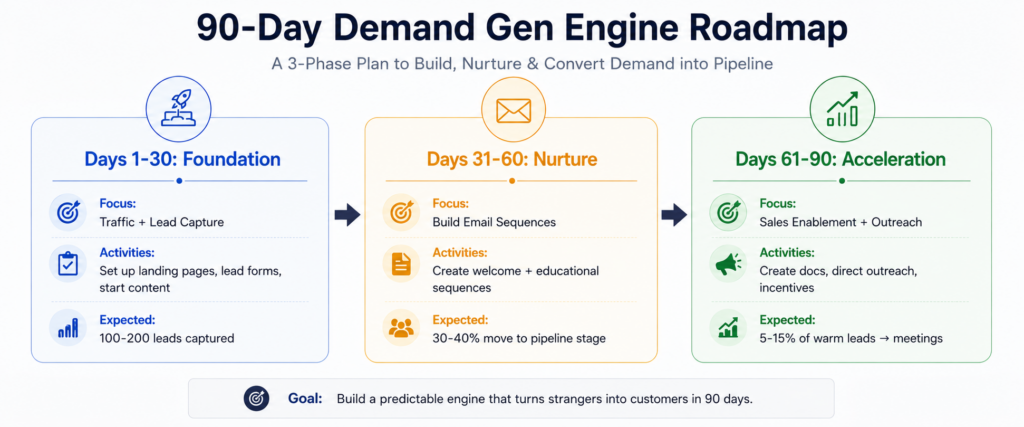
How to Sequence These Components (Timing Matters)
Most companies try to build all 4 simultaneously. Result: Nothing works well.
Instead, sequence them over 90 days.
Days 1-30: Foundation (Traffic + Lead Capture)
Focus: Get traffic generation and lead capture working.
Activities:
- Identify 5-10 high-intent keywords
- Create landing page for each
- Set up lead capture forms (3-4 fields max)
- Start publishing organic content
- If budget allows: Small LinkedIn ads test (₹2-3L)
Expected: 100-200 leads captured
Days 31-60: Nurture (Add Email Sequences)
Focus: Build nurture sequences for the 100-200 leads you captured.
Activities:
- Create welcome sequence (3 emails)
- Create educational sequence (5-7 emails)
- Set up automation (triggered by lead source)
- Monitor engagement (open rates, clicks)
Expected: 30-40% move to pipeline stage
Days 61-90: Acceleration (Add Sales Enablement + Direct Outreach)
Focus: Turn warm leads into meetings.
Activities:
- Create sales enablement docs (ROI calc, case studies, comparison)
- Set up sales team outreach process
- Create incentives (early-bird pricing, free trial offer)
- Direct sales outreach to high-intent leads
Expected: 5-15% of warm leads → meetings
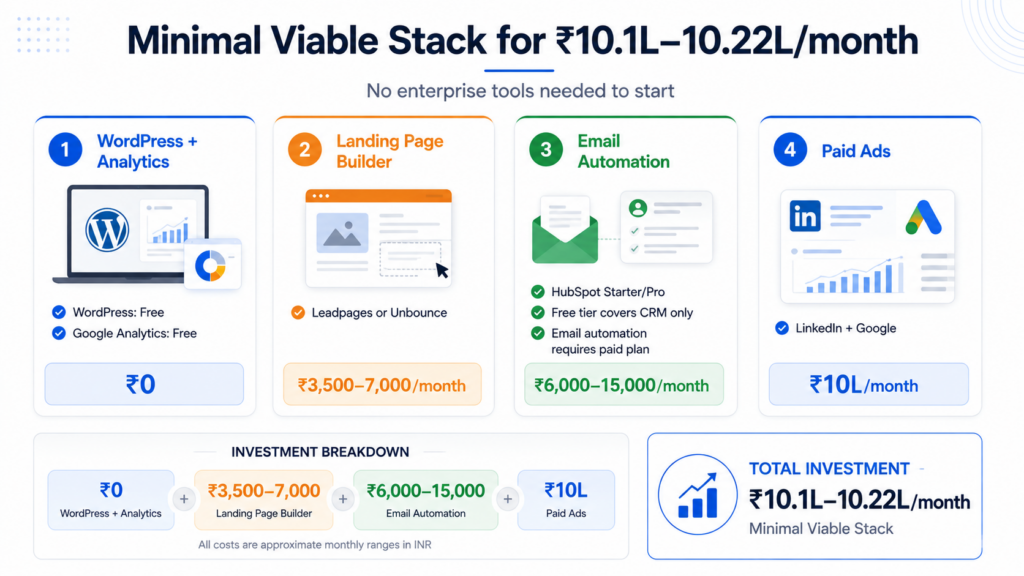
The Minimal Viable Stack for Under ₹20L/Month
You don’t need fancy tools to build this engine.
Essential tools (already have):
- WordPress (blog platform): ₹0 (you have it)
- Google Analytics (traffic tracking): ₹0
- HubSpot free tier (Free tier covers CRM only; email automation requires HubSpot Starter or above.): ₹0
Add-ons needed:
- Landing page builder (Leadpages or Unbounce): ₹3,500–7,000/month
- Email automation upgrade (HubSpot Pro): ₹6,000–15,000/month
- Basic paid ads (LinkedIn + Google): ₹50,000–200,000/month
Total: ₹10.1–10.22 lakh per month
That’s your starter stack.
As you scale and your budget increases, you can add
- Dedicated CRM (Salesforce, Close)
- Advanced analytics (Mixpanel, Amplitude)
- AI lead scoring
But you don’t need these tools to get started. Start simple.
What 90-Day Traction Looks Like
If you execute this right, here’s what you should see:
Month 1 (Days 1-30):
- Traffic: 3,000-5,000 visitors
- Leads: 80-150
- Pipeline: 0 (early stage)
Month 2 (Days 31-60):
- Traffic: 4,000-6,000 visitors (content compounding)
- Leads: 120-200 (nurture increasing conversions)
- Pipeline: 30-50 opportunities
Month 3 (Days 61-90):
- Traffic: 5,000-8,000 visitors
- Leads: 150-250 (engine running)
- Pipeline: 50-100 opportunities (accelerated from warm leads)
By Day 90, you should have 50-100 pipeline opportunities across various stages of the sales cycle.
Note: These are influenced pipeline opportunities, not closed deals. Closing takes time. But the funnel is full and producing leads consistently.
This is the same sequencing we used to build the pipeline engine for a Bangalore-based B2B SaaS with 350% SQL growth in 6 months.
The Most Common Mistakes at This Stage
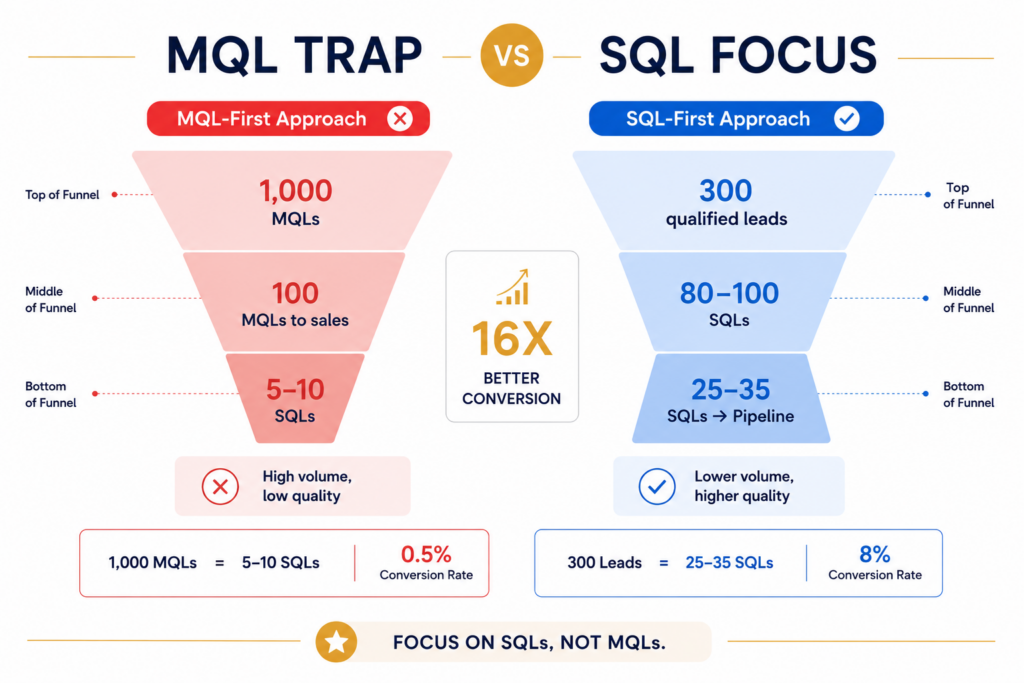
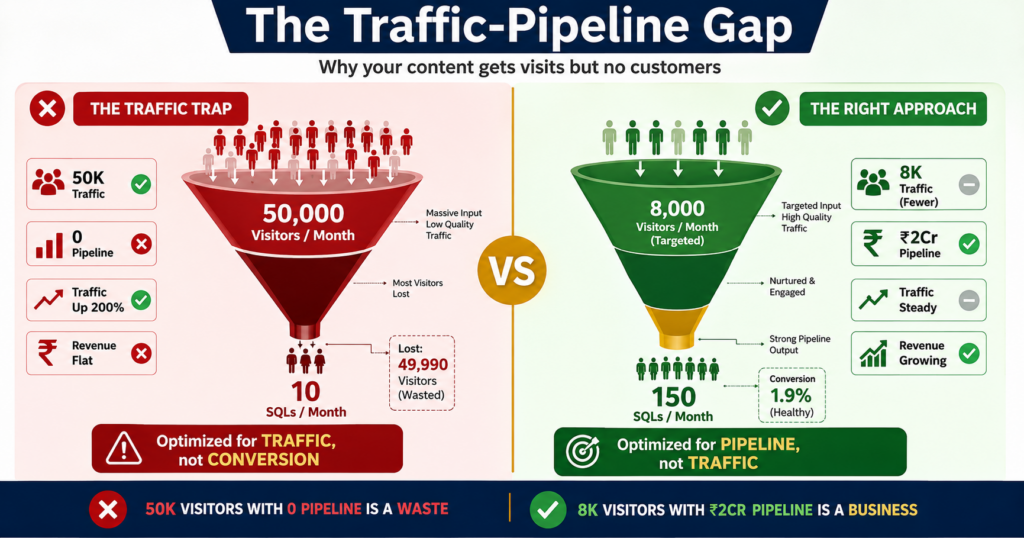
Mistake 1: Optimizing for volume instead of quality
“We need 1,000 leads/month!”
Wrong metric. You need 50-100 qualified leads/month that convert to pipeline.
100 high-quality leads > 1,000 low-quality leads.
Mistake 2: Not segmenting your audience
Sending the same message to founders, CMOs, and VPs of Marketing doesn’t work.
Each has different pain points. Each needs different messaging.
Build different landing pages and nurture sequences for each audience.
Mistake 3: Skipping the nurture component
“We have leads! Why aren’t they converting?”
Because they’re not ready. Most leads need 3-6 months of nurture before they’re ready to buy.
Don’t skip nurture. It’s where the conversion happens.
Mistake 4: Not measuring the engine
Track everything:
- Traffic source → Lead rate → Pipeline rate → Deal rate
Know which traffic sources produce the best leads. Double down on those.
Mistake 5: Giving up after 30 days
“We spent ₹10L and got no deals!”
Of course not. The engine takes time to warm up.
Give it a minimum of 90 days. Most ROI appears in months 3-6.
If you need this engine built and producing a pipeline in 90 days, we’ve done it for over 100 B2B companies.